
Beyond the Wall: How Custom Plaque Programs Enhance Donor Recognition Across Industries
For non-profit directors, hospital board members, and institutional leaders, the pressure to impress contributors while navigating the tight deadlines of facility openings and campaign milestones can feel overwhelming. When it comes to honoring the individuals who make your work possible, recognition needs to be more than just a passing thought or a generic sign. It is about connecting generosity to mission through expertly crafted Custom Donor Walls Services and comprehensive plaque programs.
While centralized donor walls remain a beautiful focal point, modern donor recognition has moved beyond a single display. Today, organizations are utilizing structured, cohesive plaque programs to recognize contributions across multiple spaces and touchpoints, creating immersive environments that inspire giving and deepen connection.
What Is a Donor Recognition Plaque, and Why Does It Matter
A donor recognition plaque is a dedicated physical element that displays the name of an individual, family, or organization that has championed your cause. Unlike standard commercial signage, these plaques are tied directly to specific giving levels, naming opportunities, or distinct capital campaigns.
While a donor wall provides a collective, centralized celebration of your supporters, a donor recognition plaque offers contextual, location-based flexibility. Plaques can be thoughtfully placed in different areas such as building entrances, specific patient wings, or outdoor campus spaces, allowing recognition to align closely with where the gift's impact occurs.
Beyond the initial acknowledgment in a thank-you letter or receipt, a plaque creates a visible, lasting record of support. When planned correctly, it becomes a crucial part of a broader donor stewardship strategy that reinforces the value of the contribution, creates a sense of permanence, and encourages repeat giving.
Expanding Plaque Programs Across Spaces
Organizations no longer limit recognition to a single lobby. By expanding plaque programs across multiple environments, you can reflect the true reach of your supporters.
Interior Environments: In hospitals, schools, and non-profits, interior plaques are beautifully integrated into patient rooms, classrooms, labs, and program areas. This approach connects the donor directly to the life-changing spaces they helped fund.
Exterior and Campus-Wide Systems: Exterior plaques extend recognition outside the building, enhancing pathways, landmarks, and outdoor gathering areas.
Integrating Wayfinding: A truly strategic recognition program seamlessly blends with your building's wayfinding system. Named rooms feature elegant plaques at entry points, and directional signage naturally incorporates these named spaces, demonstrating exactly what makes a donor wall successful in institutional spaces by creating a unified and functional architectural experience.
Types of Donor Recognition Plaques
Different environments require different plaque formats, and a comprehensive program often includes a combination of the following:
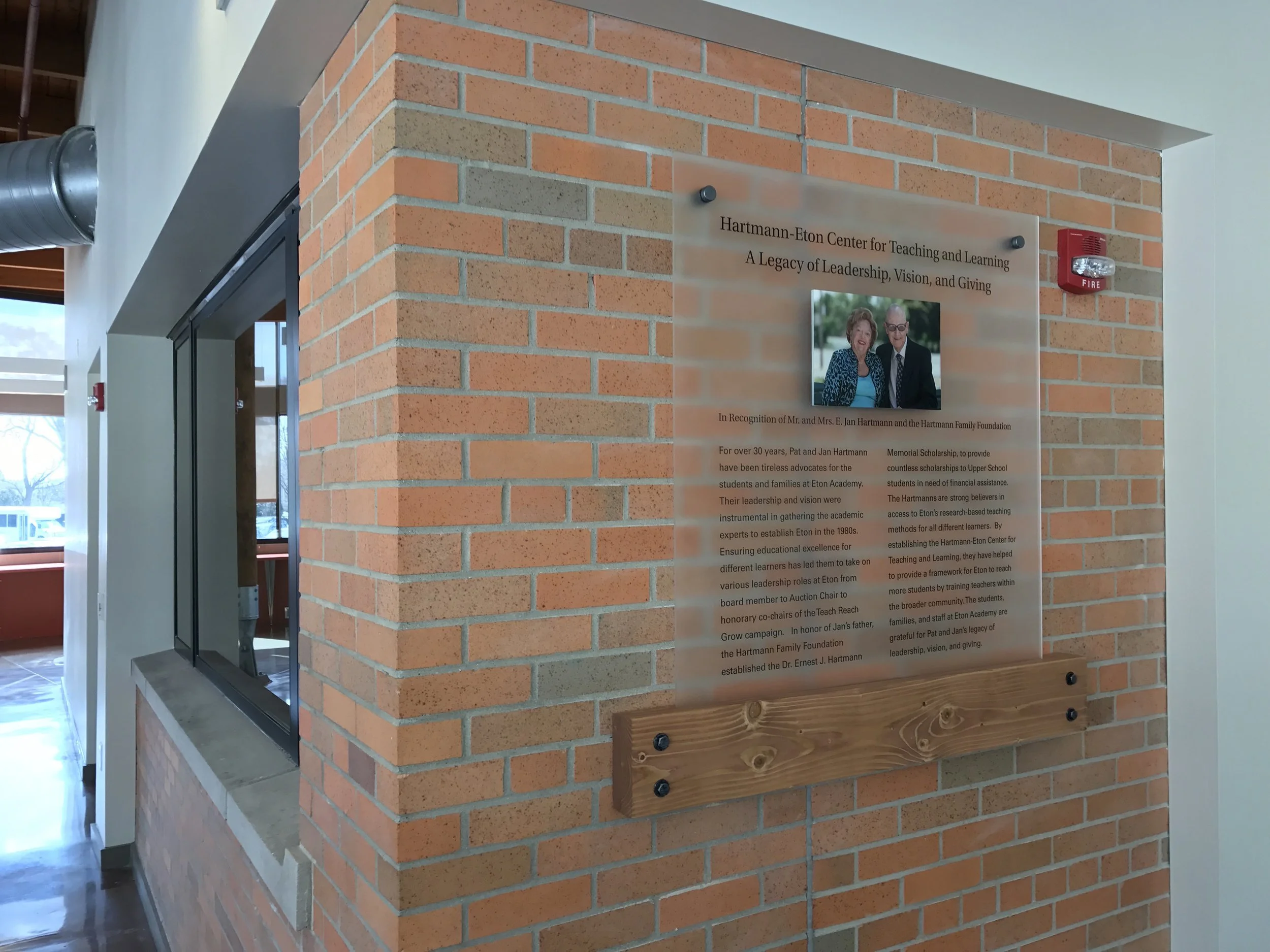
Wall-Mounted Plaques: These are highly versatile and can be used to recognize individual donors, display grouped giving levels, or visually complement a nearby donor wall installation.
Room and Naming Opportunity Plaques: Identifying spaces funded by specific donors, these connect a family or corporate sponsor directly to a function, such as a named conference area or a university research lab.
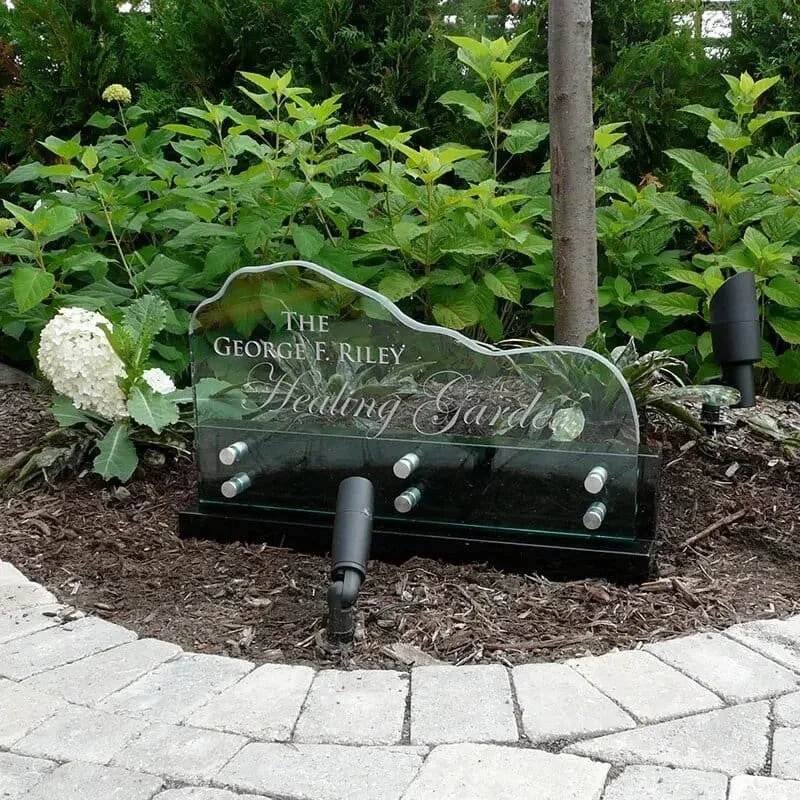
Memorial and Tribute Plaques: Serving both a recognition and a profound emotional purpose, these pieces honor gifts made in memory of a loved one and are often placed in meaningful locations, such as healing gardens or dedicated public spaces.
Digital Integration: For highly dynamic spaces, physical plaques can be paired with digital interactive digital displays. This hybrid approach offers the permanence of a physical plaque alongside the flexibility of real-time updates and deeper storytelling via touchscreens or integrated QR codes.
Key Design Considerations for Effective Recognition
Transforming your goals into thoughtful concepts requires clear guidance on design and material selection. Poor design can leave a display feeling disconnected from your brand and architecture.
On college campuses, donor plaques serve double duty—honoring supporters and reinforcing institutional pride across academic buildings. Explore how plaque programs for universities can strengthen alumni engagement and campus fundraising.
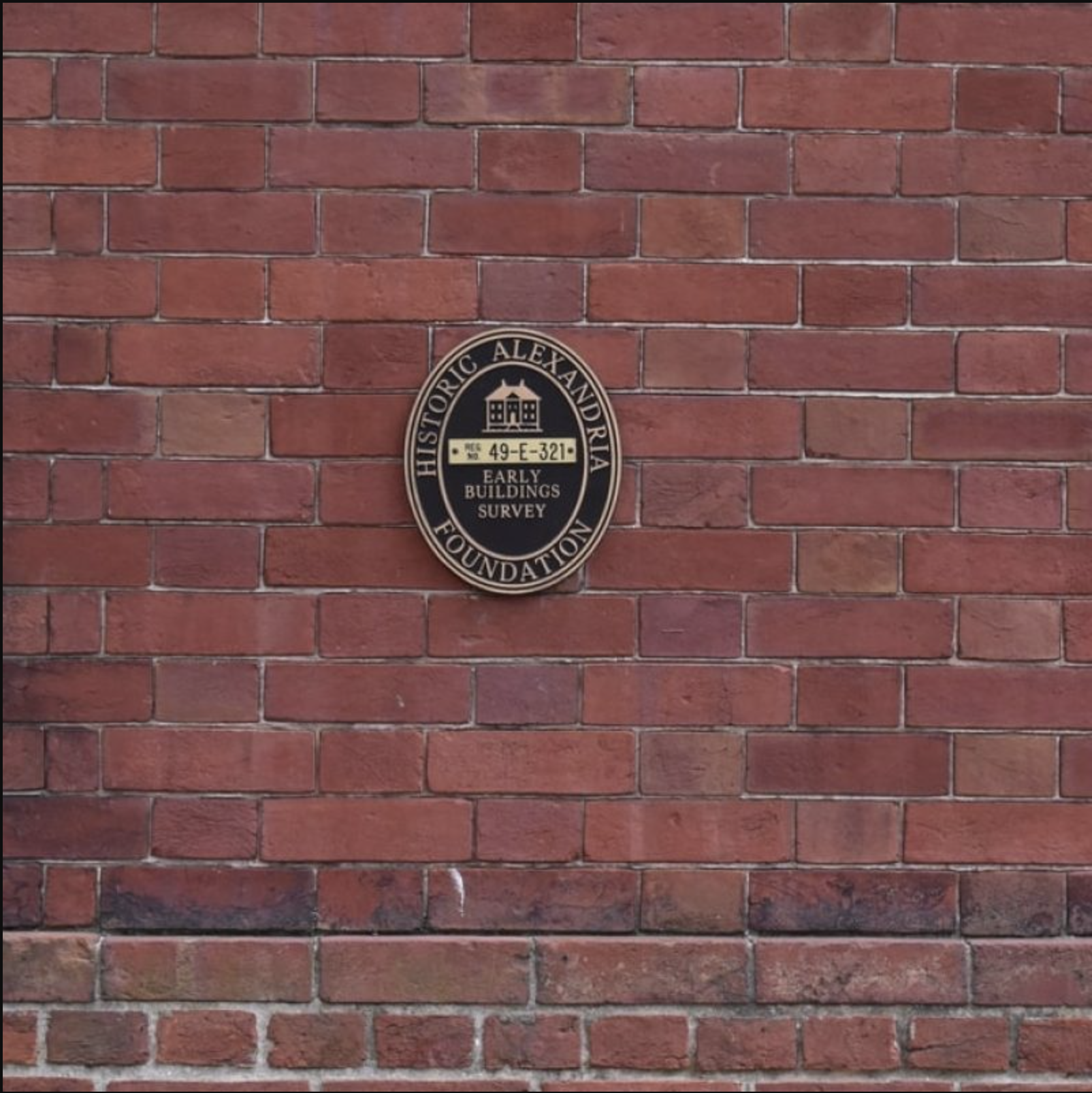
A successful plaque program carefully considers material selection, such as architectural glass for premium, light-filled spaces, or durable metals for high-traffic or exterior environments. Clear typography, logical grouping of donor levels, and rigorous adherence to ADA compliance (including proper mounting heights and tactile elements) ensure your recognition is accessible, readable, and perfectly integrated with your existing interior design.
Custom plaques create tangible, lasting touchpoints that deepen donor relationships. For organizations focused on community impact, explore how nonprofit plaque programs turn recognition into a powerful stewardship tool.
Custom Plaque Programs vs. One-Off Plaques
Organizations often start by ordering individual plaques as gifts come in. Over time, however, this leads to a disjointed aesthetic and a maintenance headache. Working with a vendor that treats donor walls like generic signage usually results in recognition that is difficult or expensive to update.
A custom plaque program offers a completely scalable, structured approach. When you partner with Specialized custom design services, these systems are expertly fabricated using a combination of time-honored techniques and advanced CAD systems in a state-of-the-art facility. This guarantees consistency across multiple locations, ensures new donors can be seamlessly added without redesigning the entire system, and provides long-term durability.
Tailoring Recognition to Your Industry
Different sectors utilize plaque programs in unique ways based on their environments and specific funding models:
Healthcare and Hospitals: Hospitals require strict design and compliance standards for plaques placed in patient wings, near specialized equipment, or along high-traffic corridors to ensure they remain sterile and safe, which is why tailored Digital donor walls services for healthcare are highly effective in modern facilities.
Education and Universities: Campuses require cohesive systems that span multiple buildings, acknowledging alumni and donors across research labs, lecture halls, and athletic facilities using digital donor walls services for universities.
Museums and Cultural Institutions: Here, the focus is highly aesthetic. Plaques must integrate perfectly with exhibit design to recognize sponsors while supporting public storytelling and the overall visitor experience.
A Simple 3-Step Path to Successful Donor Recognition
Planning a recognition system shouldn't be stressful. A true turnkey partner will guide you through a supportive process that turns donor stories into meaningful displays you are truly proud of.
01. Start with a Discovery Call
Before designing a single plaque, it is critical to start with your mission, your donors, and your vision. A successful program begins by understanding your naming opportunities and setting a clear, strategic path forward so your team never feels overwhelmed or alone in the process.
02. Design with Purpose
A custom plaque program shouldn't just be a list of names; it should be an artistic expression of your organization. Expert designers will transform your goals into thoughtful concepts, providing clear guidance on typography, materials, and layout to ensure a seamless, collaborative process that beautifully reflects your brand.
03. Turnkey Implementation
The final step is bringing the vision to life. Working with a dedicated design-build partner means expert fabrication in a state-of-the-art facility, followed by expertly managed, on-time installation. This ensures your donor recognition is delivered flawlessly and on schedule for your most important openings, events, or campaign milestones.
Conclusion: Creating Meaningful Donor Recognition Beyond the Wall
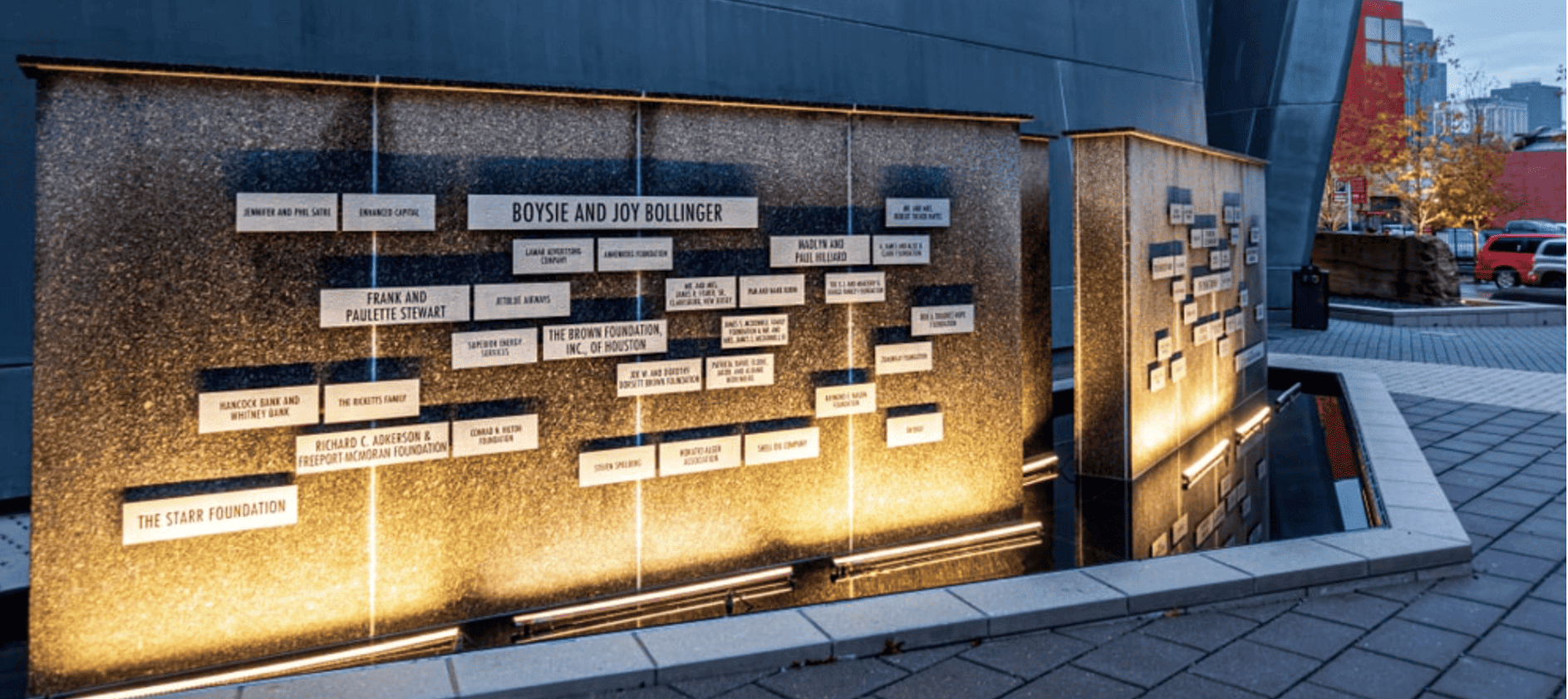
Donor recognition plaques provide a flexible, elegant, and structured way to acknowledge support across different spaces. A well-planned plaque program goes far beyond a single display; it connects recognition to real environments, supports deep donor engagement, and seamlessly aligns with your long-term fundraising goals. By combining expert design with strategic implementation, your organization can create recognition systems that evolve and inspire for generations.
Ready to elevate your donor experience? Contact DonorSigns today to schedule your Discovery Call and start building a recognition program you can truly be proud of.
Frequently Asked Questions About Donor Recognition Plaques
1. How do organizations decide between a donor recognition plaque and a donor wall for their space?
Organizations choose based on visibility, flexibility, and scale. A donor wall works best for centralized recognition of many donors, while donor recognition plaques allow location-based recognition tied to specific rooms, programs, or assets. Many institutions use both to create a layered recognition system.
2. What factors should be considered when designing a scalable donor recognition plaque program?
A scalable program requires planning for future donors, consistent design standards, and modular layouts. Organizations should define recognition levels early, select materials that allow updates, and ensure the system can expand without redesigning existing plaques.
3. How can donor recognition plaques be integrated into a broader fundraising and donor stewardship strategy?
Plaques support donor stewardship by providing long-term visibility and reinforcing the impact of contributions. When aligned with campaigns and naming opportunities, they help strengthen donor relationships, encourage repeat giving, and create a structured recognition experience across multiple touchpoints.
4. What are the challenges of maintaining donor recognition plaques over time, and how can they be addressed?
Common challenges include outdated donor lists, inconsistent formatting, and limited space for new names. These can be addressed by using modular plaque systems, planning for updates during the initial design, and combining physical plaques with digital donor recognition to provide flexibility.
5. When should an organization consider combining physical donor plaques with digital donor recognition systems?
Organizations should consider hybrid systems when donor data changes frequently, when space is limited, or when they want to provide deeper engagement. Digital donor walls can handle dynamic content, while physical plaques provide permanence and visibility within the built environment.