
Tailoring Donor Recognition: How Digital Walls Meet Unique Needs Across Sectors
Understanding Modern Donor Recognition in a Digital-First Era
Organizations recognize donors to acknowledge financial gifts, build community trust, and strengthen long-term relationships. In today’s philanthropic landscape, recognition means much more than simply etching a name into a wall. If you want to know what makes a donor wall successful in institutional spaces, you must understand that modern stewardship reflects how an institution values its supporters and vividly communicates the real-world impact of their generosity.
Enhancing Traditional Craftsmanship with Digital Innovation
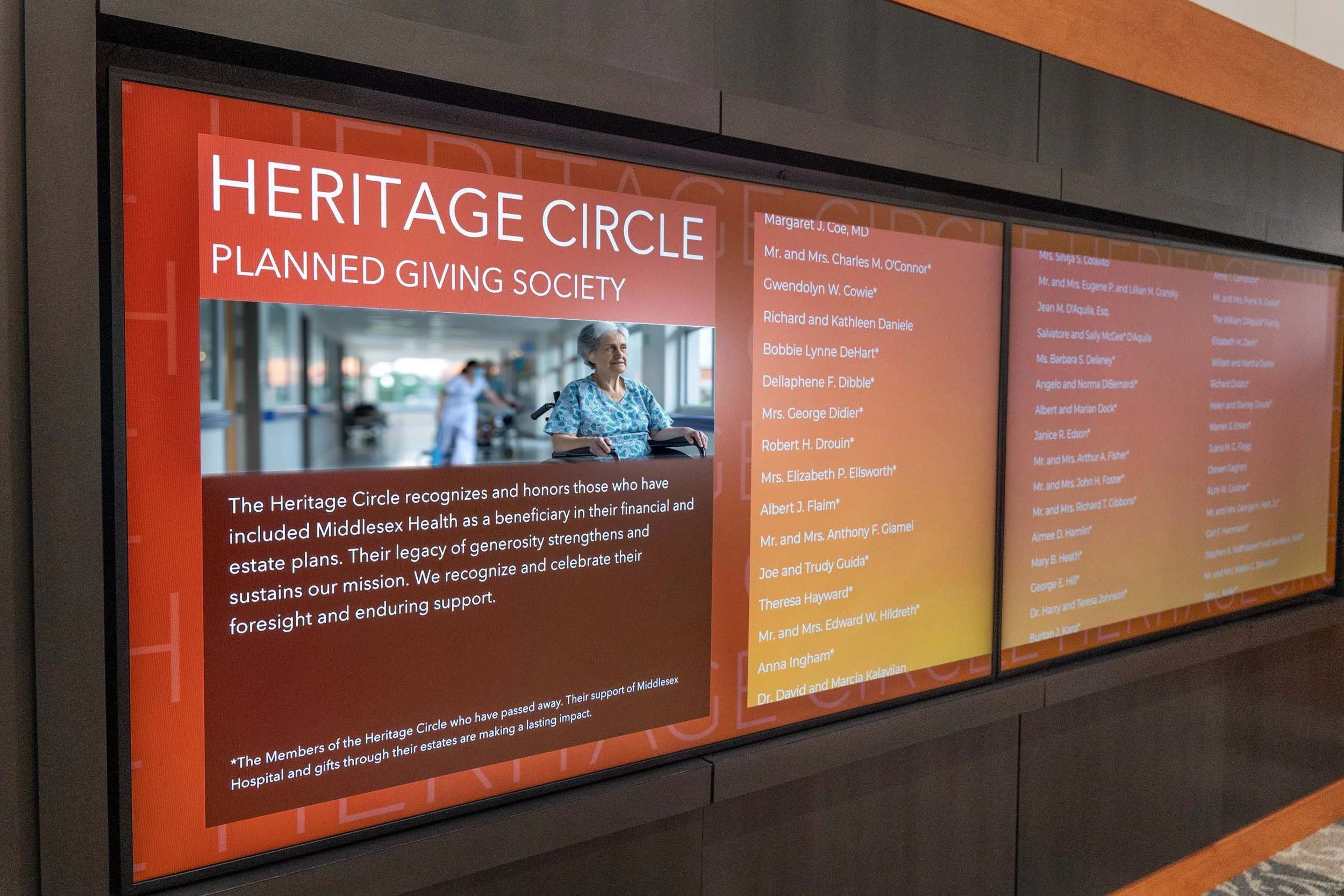
For decades, institutions honored their benefactors using beautiful, permanent architectural displays. These traditional donor walls and physical plaques offer an undeniable sense of prestige and permanence. However, as capital campaigns grow and donor bases expand, development teams often face physical space limitations inside their facilities.
Digital donor recognition systems do not erase the need for traditional craftsmanship; they enhance it. By deploying digital screens alongside beautifully fabricated physical walls, a hybrid approach, organizations unlock infinite scalability. Digital systems empower development teams to update donor lists instantly, showcase specific rotating campaigns, and adapt their recognition strategy without commissioning entirely new architectural build-outs for every annual fund.
How Digital Recognition Systems Operate
A digital donor wall utilizes three core components to create an immersive, interactive experience:
Commercial-Grade Hardware: High-definition screens, interactive touch kiosks, or expansive video walls serve as the visual interface in lobbies and hallways.
Intuitive Software: Specialized programming controls navigation, structures donor data tiers, and powers seamless search functionality.
Cloud-Based Content Management Systems (CMS): A secure online platform allows your team to upload new names, videos, and campaign graphics remotely.
Furthermore, these modern systems integrate directly with your existing CRM and fundraising platforms. This seamless data flow guarantees flawless accuracy and eliminates tedious manual data entry for your development staff.
Strategic Benefits of a Digital Ecosystem
Deploying a dynamic recognition display transforms how an organization communicates with its community.
Scale Without Limitations: Digital platforms support massive organizational growth. You can add unlimited donor listings, adjust giving tiers on the fly, and launch new campaigns without redesigning the physical space or running out of room.
Amplify Storytelling: Digital walls enable organizations to demonstrate their impact visually. Development teams upload high-resolution images, video interviews, and detailed campaign highlights to build deep emotional connections with visitors.
Execute Real-Time Updates: Your CMS empowers you to acknowledge new gifts as soon as they arrive. This immediate gratification thrills donors and reduces the operational friction of waiting months for physical fabrication.
Extract Data-Driven Insights: Interactive touchscreens track exactly how visitors engage with the content. You can analyze which videos users watch longest and which campaigns generate the most interest, allowing you to refine your future fundraising strategies based on actual data.
Tailoring Donor Recognition by Sector
Every industry faces unique architectural challenges and specific donor expectations. Digital walls give institutions the exact tools they need to customize the stewardship experience.
Healthcare Foundations and Hospitals
Hospital development teams constantly balance the need to honor major gifts with the strict requirements of patient privacy and environmental design. Digital donor walls in healthcare settings must feature calming, respectful aesthetics that align perfectly with a healing environment. Hospitals use these systems to seamlessly blend grateful patient stories, ongoing capital project updates, and foundational legacy gift recognition into one elegant, easily managed interface.
Universities and Higher Education
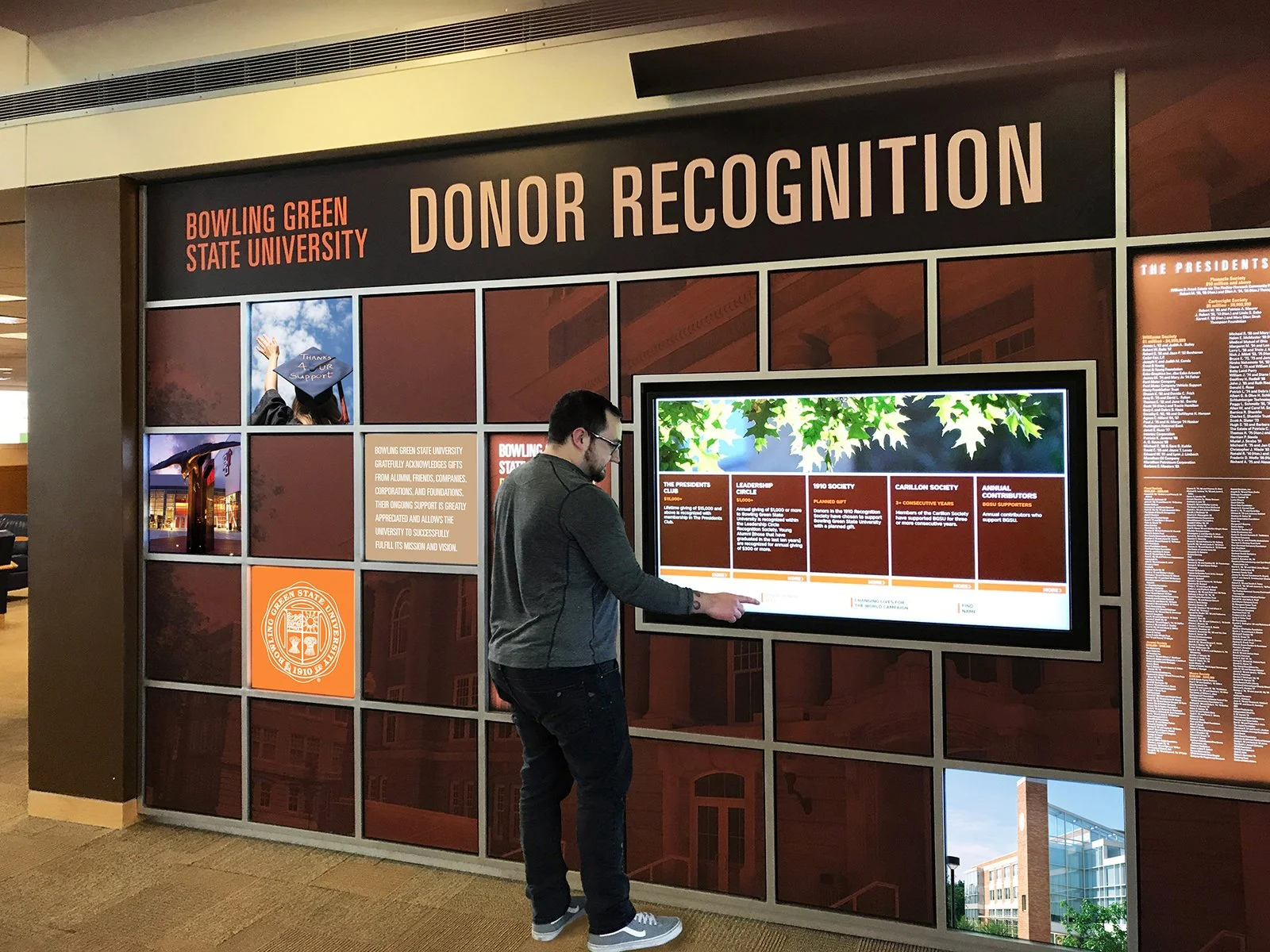
Universities rely on massive alum networks and consistent endowment growth. Digital donor walls help universities maintain lifelong engagement by publicly showcasing alum contributions, research funding, and athletic sponsorships. Large educational institutions leverage cloud-based software to synchronize recognition across multiple campus buildings, ensuring that donors who fund the engineering program receive visibility exactly where it matters most.
Nonprofits and Community Foundations
Grassroots nonprofits and community foundations must demonstrate radical transparency to secure ongoing funding. Digital systems empower nonprofits to pair donor names directly with tangible outcomes. When a community center installs a digital display, it can show exact metrics of meals served, families housed, or after-school programs funded. This visible proof of impact builds immediate trust and inspires new visitors to open their wallets.
Museums and Cultural Institutions
Museums treat donor recognition as a direct extension of the visitor experience. Curators seamlessly integrate digital donor walls into the building's architectural flow. These interactive displays allow guests to explore the corporate sponsors behind specific traveling exhibits or read the historical biographies of founding legacy patrons. The recognition essentially becomes an engaging educational exhibit in its own right.
Corporate and Community Spaces
In corporate environments, recognition focuses heavily on partnership visibility and community impact. Civic centers and corporate headquarters utilize digital systems to highlight community initiatives, promote local business sponsorships, and align philanthropic giving with their overarching brand identity.
Creating Meaningful Donor Experiences
Ultimately, fundraising relies on emotional resonance. Digital platforms allow organizations to connect financial contributions directly with human outcomes. When visitors tap a screen and watch a video about a scholarship recipient, they feel the true weight of the gift.
This story-driven approach builds profound emotional ties. When donors feel deeply valued and clearly understand their impact, they give again. Furthermore, prominent public recognition provides powerful social proof. When visitors see community leaders actively supporting a cause, they feel inspired to join the movement themselves.
A Proven 3-Step Process
Implementing a digital wall requires precise strategic planning. To avoid disjointed designs and wasted budgets, organizations must follow a proven, guided pipeline:
Start with a Discovery Call: Define your organizational mission, identify your key donor demographics, and outline your ultimate recognition goals.
Design with Purpose: Collaborate with donor recognition specialists to transform your vision into actionable concepts. Your design team balances your visual brand identity with intuitive user navigation and architectural harmony.
Turnkey Implementation: Trust an expert fabrication team to manage the hardware procurement, software integration, and physical installation. This seamless process ensures your display launches flawlessly and exactly on schedule for your next major milestone.
Overcoming Common Implementation Challenges
Organizations often face internal hurdles when upgrading their recognition strategies.
Addressing Budget Concerns: Boards frequently question the initial technology investment. Development directors must focus the conversation on long-term value. Digital systems drastically reduce future update costs, eliminate the need for constant redesign, and generate measurable ROI through increased donor retention.
Streamlining Content Management: Managing a digital screen can intimidate a small team. The solution requires choosing a platform with an incredibly simple, cloud-based CMS and assigning clear internal responsibilities for monthly updates.
Ensuring Technology Adoption: Staff members may resist learning new software. Partnering with a dedicated donor recognition vendor guarantees comprehensive training and reliable ongoing technical support.
Design Best Practices for Maximum Impact
A beautiful screen means nothing if users cannot navigate it. Design your digital experience using strict UX principles.
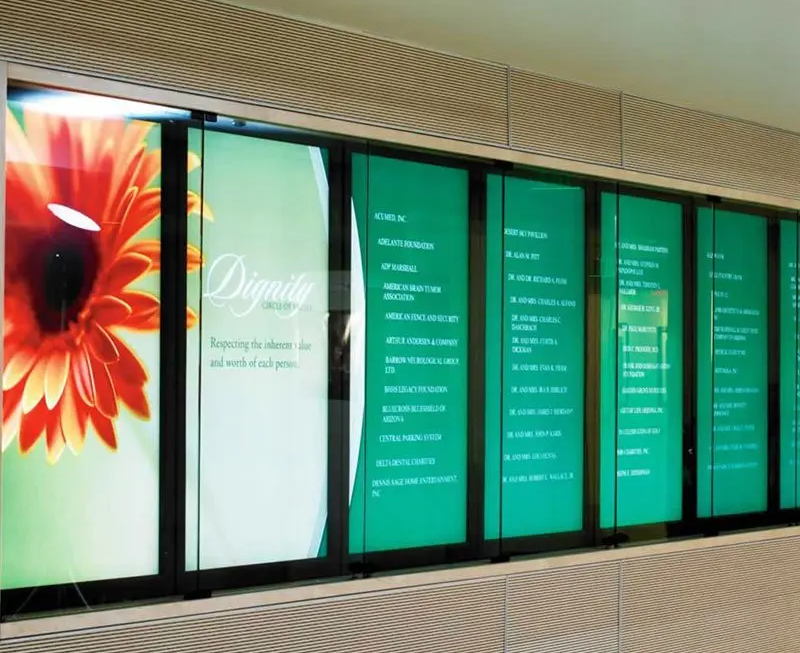
Keep the navigation simple and intuitive. Categorize donors clearly by giving level or campaign, and ensure the content loads instantly. Carefully consider the physical placement of the screens. Install the displays in high-traffic lobbies or major architectural junctions where visitors naturally congregate. Finally, maintain absolute visual harmony. Use your exact brand colors, official typography, and high-quality photography so the digital interface feels like a natural extension of your building.
The Future of Donor Stewardship
As technology evolves, philanthropic recognition will become even more sophisticated. Future systems will leverage artificial intelligence to tailor the on-screen experience to the person in front of it, offering personalized messaging based on their past giving history.
Furthermore, recognition will expand far beyond the physical lobby. Organizations will push their interactive digital donor walls directly to their websites and virtual event platforms, creating a unified recognition ecosystem that honors supporters worldwide.
Conclusion: Building Meaningful Donor Recognition That Lasts
Effective donor recognition demands a meticulous strategy. Development teams must align their recognition formats with their organizational mission, their donor expectations, and their long-term growth projections.
Digital donor walls deliver the flexibility, storytelling power, and infinite scalability that modern institutions require. By combining interactive technology with traditional craftsmanship, organizations move beyond static lists to create truly immersive experiences.
When you partner with experienced specialists like DonorSigns, you secure a beautifully designed, turnkey digital display that functions flawlessly. You remove internal operational stress, meet your critical deadlines, and ultimately deliver a profound recognition experience that honors your most generous supporters and beautifully elevates your space.
Ready to explore the perfect recognition strategy for your sector? Contact DonorSigns today to book your discovery call and start designing with purpose.
Frequently Asked Questions
1. How do digital donor walls support long-term donor recognition without frequent redesign costs?
Digital donor walls eliminate the need for physical updates by using a content management system. Organizations can add, edit, or reorganize donor listings instantly without reprinting or reinstalling materials. This makes digital donor recognition more cost-effective and scalable over time, especially for growing donor programs.
2. What factors should organizations consider when choosing between digital and traditional donor recognition systems?
Organizations should evaluate their fundraising goals, donor volume, update frequency, and available space. Digital donor walls work best for organizations that require flexibility, real-time updates, and storytelling. Traditional donor walls may suit smaller, static recognition needs. Many organizations choose a hybrid donor recognition approach to balance both.
3. How can digital donor recognition improve donor retention and engagement beyond name display?
Digital donor recognition allows organizations to present stories, impact data, and campaign progress. This creates a stronger emotional connection with donors. When donors see how their contributions make a difference, they feel valued and are more likely to continue supporting the organization.
4. What role does integration with donor databases play in managing digital donor walls effectively?
Integration with donor databases ensures accurate and automated updates. It reduces manual work, prevents errors, and maintains consistent recognition across platforms. This connection also allows organizations to align donor recognition with fundraising campaigns and track engagement more effectively.
5. How can organizations tailor digital donor recognition to meet the needs of different sectors like healthcare or education?
Each sector has unique requirements. Healthcare organizations must balance privacy with storytelling, while universities focus on alum engagement and legacy giving. Digital donor walls allow customization in content, structure, and presentation, making it easier to align recognition with sector-specific goals and donor expectations.