
Why Every Industry Needs a Digital Donor Wall: Museums, Hospitals, Universities, and Nonprofits Compared
The Changing Landscape of Donor Stewardship
Philanthropy relies on relationships. In the past, organizations simply etched names into stone or brass to acknowledge a financial gift. Today, modern donors expect more than a simple transaction; they want to see the tangible results of their generosity. They want to connect deeply with your mission, understand the stories of the people they help, and see how their contributions actively shape the future.
This demand for transparency and connection has revolutionized donor stewardship. Organizations across all sectors face mounting pressure to impress contributors, board members, and leadership while managing tight deadlines for capital campaign milestones. To meet these expectations, forward-thinking institutions deploy digital donor walls for Muesums . These dynamic systems transform passive recognition into immersive, interactive storytelling experiences.
What Exactly Is a Digital Donor Wall?
Digital donor walls move recognition beyond fixed plaques and static lists. These systems leverage commercial-grade screens and intuitive software to showcase donor names, impact stories, and campaign progress. Organizations deploy digital donor walls to elevate the donor experience, connect generosity directly to their mission, and solve physical space constraints in their facilities.
To understand how these systems operate, you must look at their three core components:
Commercial-Grade Digital Displays: High-definition monitors, interactive touchscreens, or large-scale architectural video walls serve as the visual canvas. Installers strategically place these screens in high-traffic lobbies, major hallways, and dedicated recognition spaces to maximize visibility and publicly honor contributors.
Specialized Recognition Software: Purpose-built programming structures your complex donor data. This software powers the interactive elements, enabling visitors to search for specific names, filter by giving tiers, and navigate seamlessly through different fundraising campaigns.
Cloud-Based Content Management Systems (CMS): A robust CMS empowers your development team to take full control of the display. Authorized users log in remotely to update donor lists, track progress when raising money for a non-profit capital campaign, and instantly publish multimedia content, all without requiring physical site visits, new fabrication, or specialized IT skills.
The Evolution: Bridging Traditional Craftsmanship and Digital Innovation
Growing organizations often face severe pressure when managing expanding donor lists. Physical spaces fill up quickly, and the cost of commissioning new architectural structures for every minor campaign strains the budget. Furthermore, static lists cannot tell a comprehensive story.
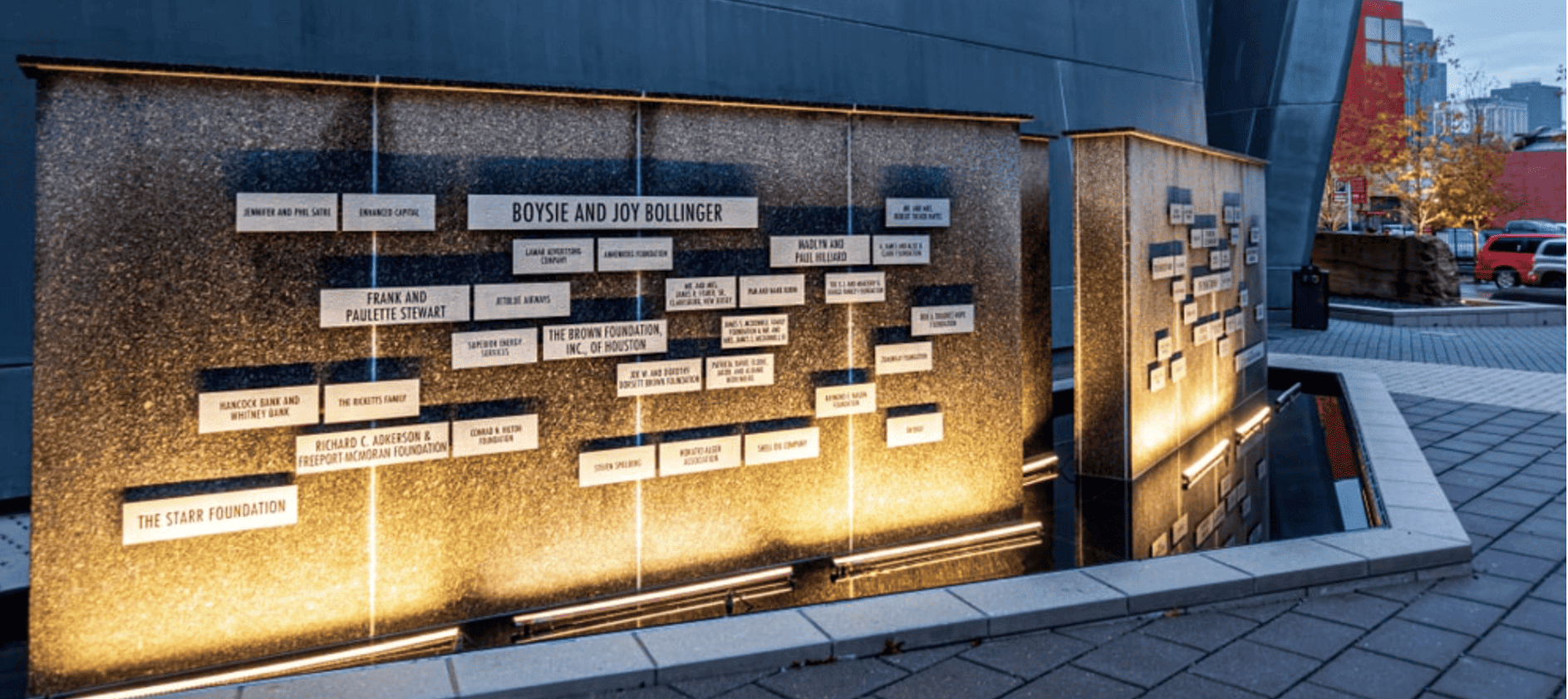
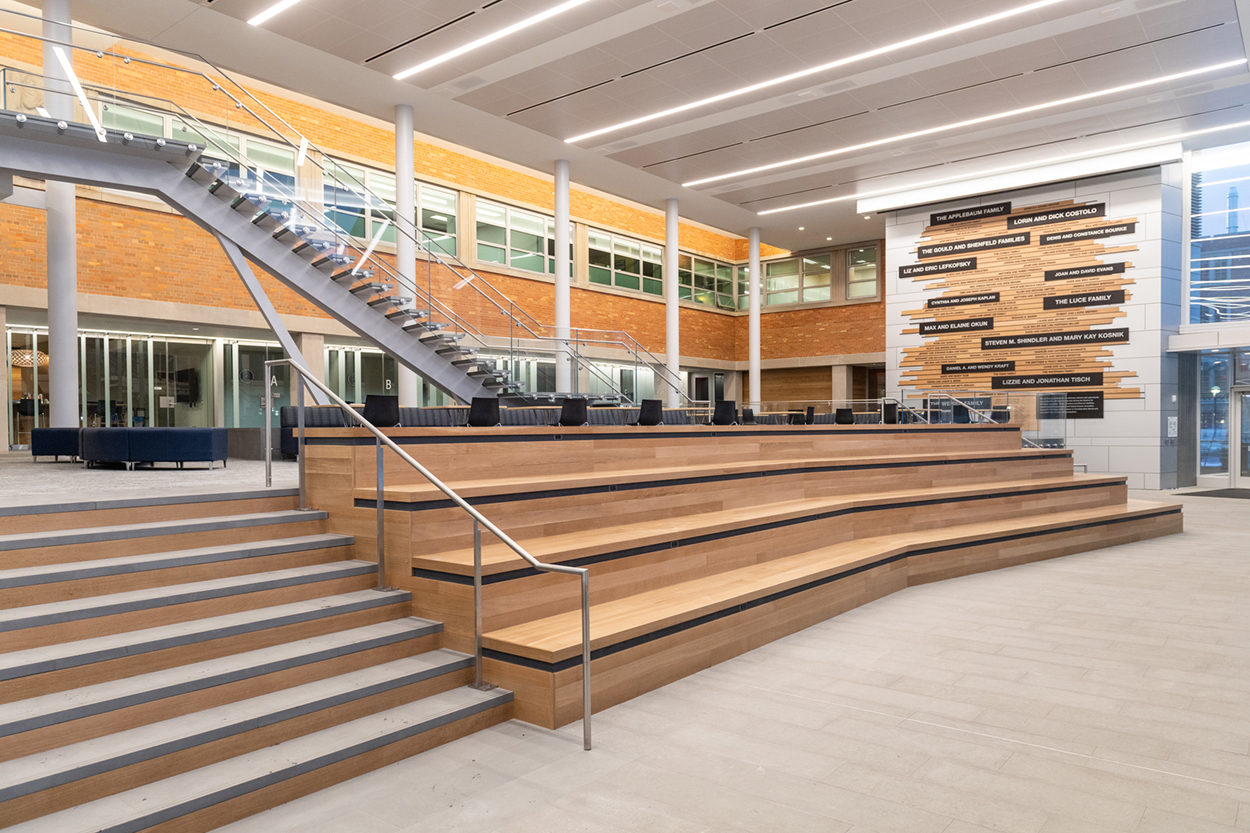
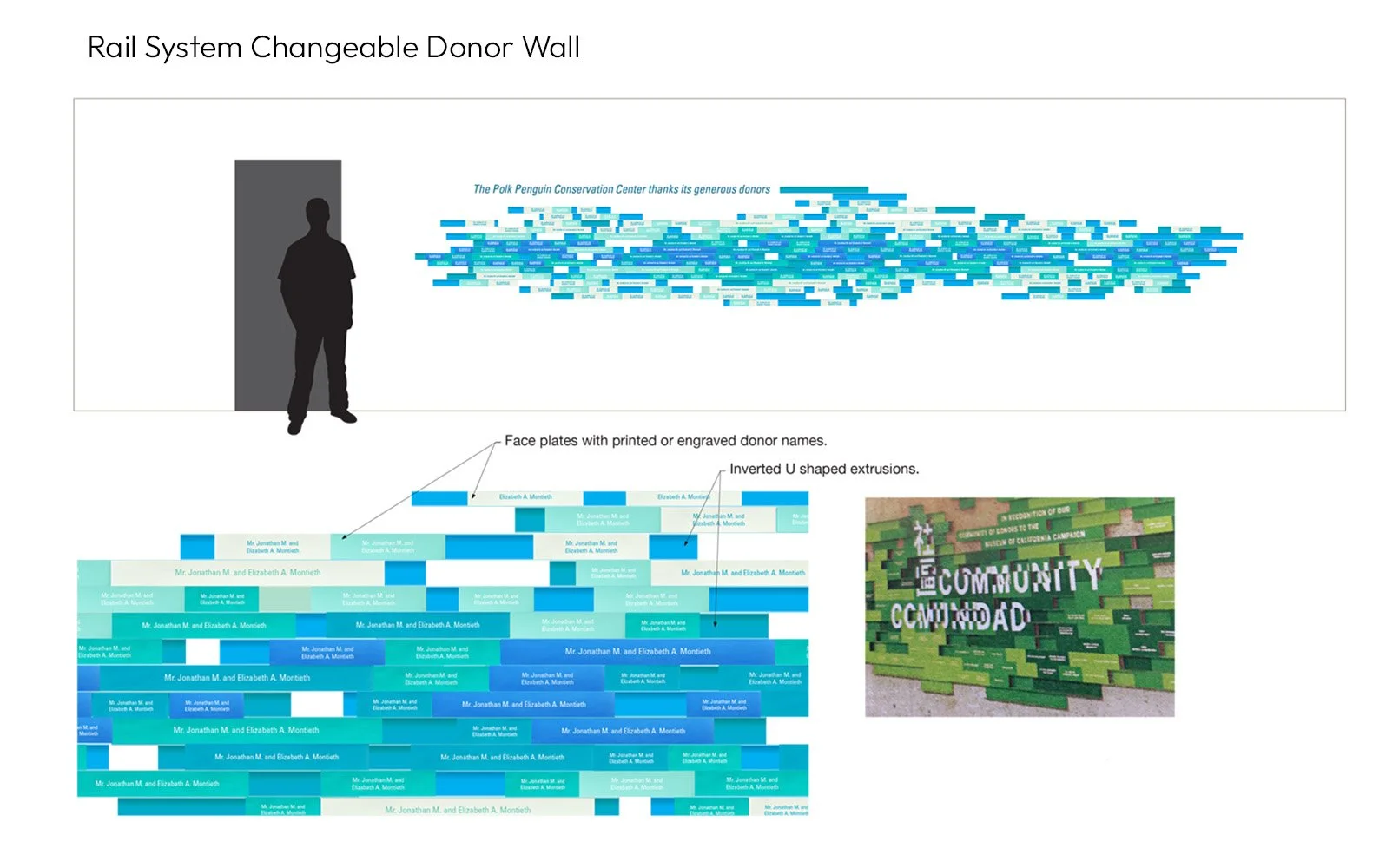
However, organizations do not need to abandon traditional craftsmanship. Digital donor walls do not simply replace beautifully crafted physical displays; they act as powerful companions. Many institutions choose a hybrid approach. They commission elegant custom donor walls utilizing wood, glass, or metal to permanently honor transformational legacy gifts and foundational founders. They then integrate digital screens seamlessly into this physical architecture to handle dynamic needs, such as annual funds, rotating campaigns, and high-volume donor lists.
This evolution solves modern recognition challenges. It allows organizations to instantly update extensive databases, highlight specific giving tiers, and integrate direct data from fundraising platforms. Most importantly, interactive donor walls prioritize the donor experience. They invite visitors to touch the screen, search for family names, and watch videos that explain exactly how their contributions drive your mission forward.
The Transformative Benefits of Digital Donor Walls
Deploying a digital recognition system delivers measurable advantages that fundamentally change how your development team operates.
Cultivate Deep Donor Engagement
Interactive displays invite visitors to explore profiles and impact stories, strengthening emotional connections. When a visitor taps a screen and watches a two-minute video about a scholarship recipient or a cured patient, they experience the true weight of philanthropy. This emotional resonance drives donor retention and inspires future giving.
Empower Real-Time Campaign Updates
Traditional updates require drafting designs, approving proofs, fabricating materials, and scheduling physical installation. Digital systems eliminate this friction. Your team can add new contributors instantly, the moment a check clears. This flexibility supports active capital campaigns, ensures perfect accuracy, and eliminates the stress of meeting tight deadlines ahead of major gala events.
Amplify Visual Storytelling
Names alone rarely inspire action. Digital platforms support high-quality video, vivid photography, and compelling written narratives. You can vividly show donors the real-world impact of their generosity. You can highlight the blueprints of a new building, feature interviews with your medical staff, or showcase the community programs your donors fund.
Deliver Infinite Scalability
As your fundraising program grows, your digital system expands effortlessly. Physical walls eventually run out of blank space. Digital systems allow you to add thousands of new names, create infinite new recognition tiers, and launch entirely new campaign categories without ever expanding the physical footprint of the display.
Digital Donor Walls by Industry: A Comprehensive Comparative Analysis
While the underlying technology remains similar, different sectors utilize digital donor walls to achieve vastly different strategic goals.
Museums and Cultural Institutions
Museums integrate digital donor walls directly into the visitor journey. Art galleries, science centers, and historical societies use these interactive screens to connect specific donors to the exhibits they fund.
Visitors can explore the benefactors behind educational programs or view the corporate sponsors that make traveling exhibitions possible. This approach beautifully highlights legacy patrons and exhibition partners without cluttering the museum's carefully curated architectural space. Furthermore, museums frequently use digital platforms to share historical context about the institution's founding members, turning donor recognition into an educational exhibit in its own right.
Hospitals and Healthcare Foundations
Healthcare organizations run continuous, massive fundraising programs that require constant maintenance. Hospitals must track capital campaigns for new wings, recognize grateful patient programs, and honor foundational legacy gifts.
Digital walls help hospital foundations instantly recognize major-gift and capital-project contributors. Because hospital environments require specific aesthetic considerations, expert designers craft these digital interfaces to feature calming, respectful visuals. They use soothing color palettes, gentle transitions, and elegant typography that align perfectly with healing healthcare environments. Digital systems also allow hospitals to easily update specific recognition tiers, ensuring that critical major donors receive immediate public acknowledgment.
Universities and Educational Institutions
Universities rely heavily on alum engagement and ongoing endowment growth. Managing donor data across sprawling campuses presents a massive logistical challenge.
Digital recognition systems help institutions spotlight scholarships, research endowments, athletic facility sponsors, and campus impact. Large universities leverage centralized cloud software to synchronize donor recognition across multiple buildings and remote campuses. A donor who funds the business school can receive recognition on a screen in the main administrative building and simultaneously on a display inside the specific college they supported. Universities also use these interactive screens to show prospective students and visiting families the robust financial backing and community support the institution enjoys.
Interactive donor walls are transforming how universities engage alumni and prospective donors. Explore our university donor recognition systems that combine physical presence with digital storytelling for maximum campus impact.
Nonprofits and Community Organizations
Grassroots nonprofits and large community organizations must build immediate trust and radical transparency with their local communities. They often operate with limited physical space and tight administrative budgets.
Digital donor walls empower nonprofits to pair donor names directly with tangible outcomes. When a community center installs a digital display, they can show exact metrics on how many meals they served, how many families they housed, or how many animals they rescued. This visible proof of impact validates the donor's investment, supports ongoing fundraising initiatives, and inspires new visitors to contribute to the mission.
A Proven Framework: How to Plan and Implement Your Digital Donor Wall
Choosing the right donor recognition strategy often overwhelms development teams. To avoid false starts, disconnected designs, and wasted budgets, you must follow a proven, guided process. Treating donor recognition like a standard IT hardware purchase leads to disastrous results. Instead, follow these three critical steps:
1. Initiate a Comprehensive Discovery Phase
Never buy hardware before defining your strategy. Start by clearly defining your mission, identifying your target donors, and establishing your long-term recognition goals. Analyze your current database size and project your growth over the next five years. Determine exactly what stories you want to tell and what actions you want users to take after interacting with the display.
2. Design with Purpose and Architectural Harmony
Work closely with recognition specialists to transform your strategic goals into thoughtful concepts. Your design must balance your organization's brand identity with intuitive user navigation. Expert designers will analyze the architectural space, consider lighting conditions, and recommend the perfect blend of physical framing and digital screens. They ensure the user interface looks breathtaking and operates seamlessly.
3. Execute Turnkey Implementation and Fabrication
Partner with an expert fabrication team that handles every single detail. A true turnkey partner manages the hardware procurement, software programming, system integration, and final physical installation. This comprehensive approach ensures your project launches perfectly on schedule for your next milestone event, eliminating the stress of coordinating multiple disjointed vendors.
Essential Design Best Practices for Maximum Impact
Establish Clear Content Hierarchy: Organize donors logically by giving levels, specific campaigns, or alphabetical categories. Use distinct typography and spacing to differentiate between a $500 annual fund donor and a $5,000,000 legacy benefactor.
Prioritize Intuitive Navigation: Overcomplicating the interface frustrates users and diminishes the experience. Keep categories clear, make touch buttons large and responsive, and ensure the search function returns accurate results instantly.
Ensure Absolute Accessibility: Design your digital experience for everyone. Implement ADA-compliant features, including high-contrast text, readable font sizes, screen reader compatibility, and navigation buttons at accessible heights for wheelchair users.
Maintain Brand Consistency: The digital interface must feel like a natural extension of your organization. Use your exact brand colors, approved typography, and official logos. The screen should look like it belongs exclusively to your institution.
Common Pitfalls and Costly Mistakes to Avoid
Organizations frequently make critical errors when rushing into digital recognition projects. Avoid these common traps:
Lacking a Long-Term Content Strategy: Hardware means nothing without a compelling story. Before installation, plan exactly how often your team will update the CMS, who will be responsible for writing new impact stories, and where you will source your multimedia assets.
Ignoring Ongoing Maintenance: Software requires updates, and screens require monitoring. Neglecting system maintenance leads to broken links, frozen screens, and outdated donor lists, which actively damages your organization's reputation.
Buying Generic Signage from AV Vendors: Treating donor recognition like a standard television installation creates displays that feel cold and disconnected from your mission. General AV companies understand cables; they do not understand donor stewardship. Always work with dedicated donor recognition specialists who understand fundraising strategy, architectural integration, and the deep psychology of giving.
Conclusion: Elevate Your Space and Honor Your Community
Investing in a digital donor wall generates a massive return on investment by boosting donor retention, demonstrating radical transparency, and inspiring future generosity. However, achieving this success requires much more than simply hanging a monitor in a hallway. It requires thoughtful strategic planning, reliable specialized software, and a deep, empathetic understanding of your specific mission.
By choosing an experienced partner who guides you from the initial discovery call through the final turnkey installation, you guarantee a digital display that functions flawlessly. You relieve pressure on your internal team, respect your tight deadlines, and ultimately deliver a meaningful recognition experience that honors your community and beautifully elevates your space.
Ready to transform how you celebrate your supporters? Contact DonorSigns today to book your discovery call and start designing with purpose.
FAQs
1. How does a digital donor wall improve donor retention compared to traditional recognition methods?
A digital donor wall improves donor retention by fostering ongoing engagement rather than one-time recognition. It allows organizations to update content, highlight impact stories, and showcase donor contributions in real time. This continuous visibility helps donors feel valued and connected, which increases the likelihood of repeat giving.
2. What factors should organizations consider before investing in a digital donor wall system?
Organizations should evaluate their donor recognition goals, available space, and long-term content strategy. They also need to consider hardware quality, software flexibility, integration with existing CRM or fundraising platforms, and ease of updates. Planning for scalability and maintenance is critical for long-term success.
3. Can digital donor walls integrate with existing fundraising and donor management systems?
Yes, most modern digital donor wall systems can integrate with fundraising platforms and donor management software. This integration ensures accurate donor data, reduces manual updates, and allows real-time synchronization of donor contributions, campaigns, and recognition levels.
4. How do digital donor walls support storytelling and donor engagement across different industries?
Digital donor walls use multimedia content such as videos, images, and interactive profiles to communicate impact. In museums, they enhance visitor storytelling. In hospitals, they create meaningful recognition spaces. In universities and nonprofits, donor contributions are connected directly to outcomes, which strengthens engagement.
5. What is the long-term ROI of implementing a digital donor wall for nonprofits and institutions?
The long-term ROI comes from improved donor engagement, higher retention rates, and reduced operational costs. Organizations save on physical updates while gaining the ability to run dynamic campaigns. Over time, this leads to stronger donor relationships and increased fundraising impact.