
All You Need To Know About Donor Pyramids
Understanding the Donor Pyramid
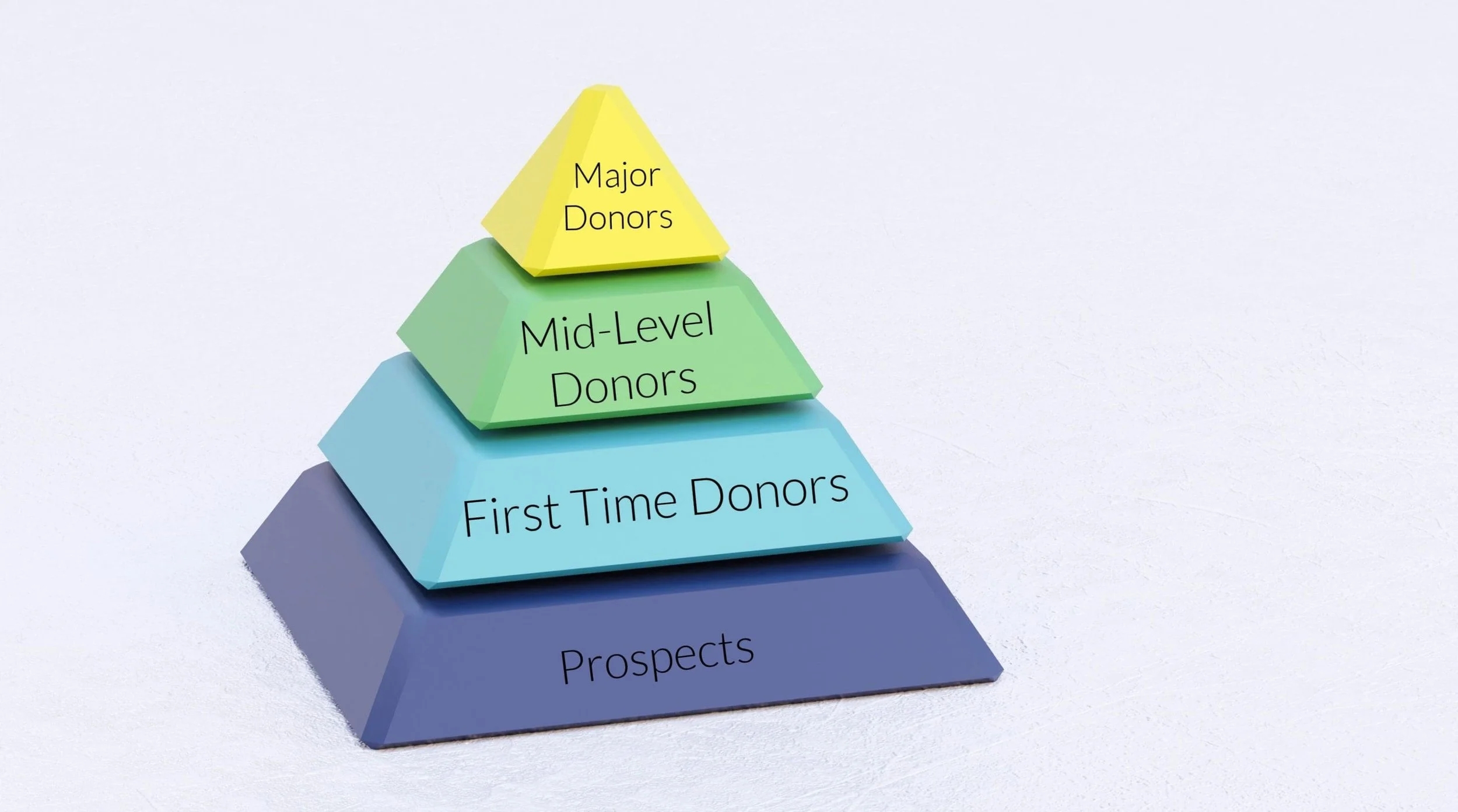
The donor pyramid is a widely used fundraising model that helps nonprofits visualize their donor base. It organizes donors from the broad base of potential supporters to the narrow top of the most generous contributors.
This model looks at giving from the donor’s perspective, showing how individuals typically move from smaller, one-time gifts to larger, long-term contributions. While some fundraising strategies use a top-down approach, the donor pyramid clearly illustrates how broad support fuels major gifts.
The goal of the donor pyramid is to help organizations grow sustainable funding by understanding who their donors are and how they offer support. As the pyramid narrows, it divides into various sections, representing fewer donors who give more frequently, contribute larger amounts, or leave legacy gifts.
What Is a Donor Pyramid?
A donor pyramid represents your different types of donors—either all supporters or a specific segment—organized by giving level.
Donors at the base give smaller amounts but make up the largest group
Donors at the top give significantly larger gifts but are fewer in number
This structure helps nonprofits understand where donations come from and how resources should be allocated. Using a donor pyramid allows organizations to plan smarter development strategies and focus their efforts where they matter most.
What Is the Donor Pyramid Used For?
Beyond fundraising, donor pyramids play an important role in campaign planning. Each campaign should have a clear financial goal that donors and staff can easily understand. Tools such as a donor pyramid or gift range chart help visualize those goals.
Key benefits of using a donor pyramid include:
Clarifying how many donors are needed at each giving level
Supporting realistic campaign goal setting
Helping board members and leadership understand fundraising dynamics
Many executive directors and board members underestimate the importance of large gifts. A donor pyramid and gift range chart clearly show that successful campaigns depend heavily on major donors, even when many smaller gifts are involved.
Addressing Common Criticism of the Donor Pyramid
Some critics argue that donor pyramids are ineffective because every nonprofit has a unique donor distribution. While it’s true that no two organizations are identical, creating a customized donor pyramid can be extremely valuable.
A donor pyramid helps nonprofits:
Segment donors more effectively
Visualize donor behavior and giving patterns
Identify opportunities to improve fundraising efficiency
It can also guide donor recognition strategies. For example, you may choose to publicly recognize top-tier supporters by featuring them on a donor wall, while using different recognition methods for other levels.
Using the Donor Pyramid Strategically
Nonprofits must always consider fundraising ROI. While it’s important to value every donor, most organizations don’t have the time or resources to cultivate every donor in the same way.
A donor pyramid helps you:
Allocate time and energy strategically
Focus cultivation efforts where they’ll have the greatest impact
Balance broad engagement with targeted major-donor development
By visualizing your donor base through a pyramid, you can build stronger relationships, improve efficiency, and create a more sustainable fundraising program.