
What is a Donor Tree?
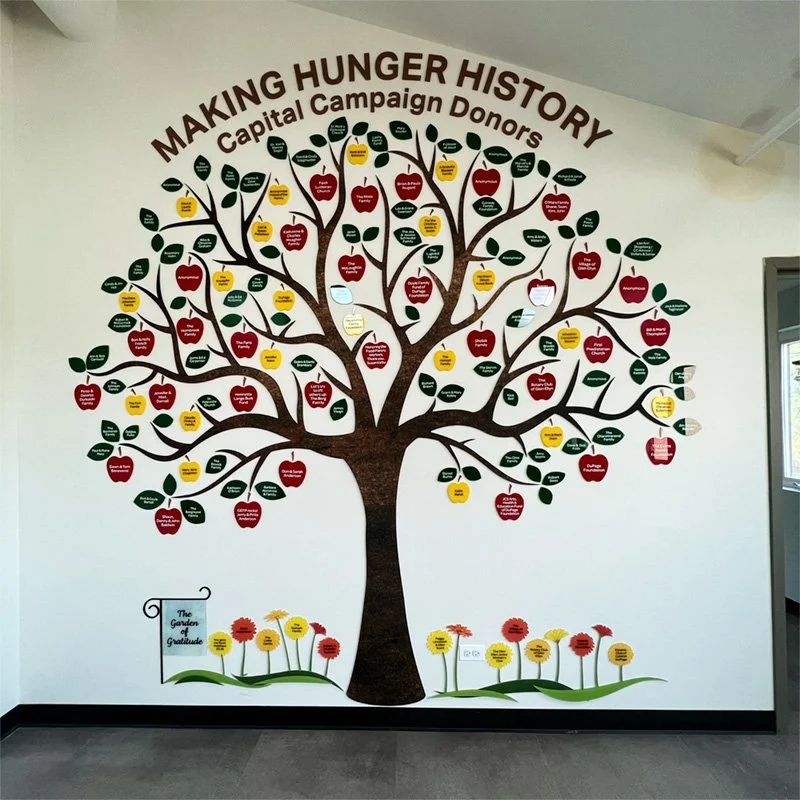
What Is a Donor Tree?
Most nonprofit organizations use donor trees and walls as a memorable way to recognize donors who support fundraising campaigns and initiatives. Donor trees acknowledge contributors while also spreading awareness about a cause, making them an effective tool for encouraging donations and increasing funding.
A donor tree is designed to identify and honor individuals who have contributed to an initiative, charity, or community project. Each donor is represented by a unique leaf on the tree, which can display their name and, in some cases, additional information such as their donation level.
Materials and Design Options
Donor trees can be fabricated from a variety of materials, including:
Acrylic
Metal
Glass
Other mixed materials
The final material selection depends on the custom design goals of the project. Donor trees serve as a timeless tribute, preserving donor names and recognizing the generosity that helped fund public spaces or nonprofit initiatives. Over time, they inspire future generations to give back to their communities.
How Does a Donor Tree Work?
A donor tree is a unique and inclusive way to recognize every donor who supports an organization. Each donor receives a leaf that is added to the tree. Depending on the design, donors may:
Fill in their information
Have their name engraved
Paint or customize their leaf
Public recognition appeals to many donors and can significantly increase engagement and contributions. When donor trees are placed in high-traffic public areas, they often spark curiosity and inspire new supporters to get involved.
Donation Levels and Visual Impact
Open spaces on a donor tree can serve as a visual reminder of opportunities to give. Organizations may also:
Use different leaf colors to represent giving levels
Include donation tiers visually on the tree
Add space for corporate logos to recognize business donors
Some donors prefer to remain anonymous. In these cases, donors may choose not to have a leaf displayed or request that their contribution be listed without a name.
Supporting Donor Cultivation and Growth
Nonprofit organizations rely on donors to expand programs and serve their communities. Strong donor management and donor cultivation are essential for successful fundraising.
Public recognition tools like donor trees:
Appeal to donors who prefer visible acknowledgment
Encourage healthy giving competition
Motivate others to participate in campaigns
These displays create momentum and reinforce a culture of generosity.
Permanent vs. Temporary Donor Trees
Different campaigns call for different types of donor trees:
Metal donor trees
Designed for permanent installation and often used to honor major donors. Leaves may be made of metal, glass, or other durable materials and are typically fabricated by specialized donor recognition companies.Temporary donor trees
Made from paper or cardboard, with handwritten leaves for short-term campaigns or small donations. These are ideal for community events or quick fundraising efforts.
Larger donors often expect more substantial and permanent recognition, making material choice an important consideration.
A vital Ingredient
Developing a strong culture of donor recognition is essential for nonprofits of all sizes. When donors feel appreciated and acknowledged, they are more likely to continue supporting your mission.
A donor tree is an effective and meaningful way to recognize generosity at every level. By honoring all donors—regardless of contribution size—your organization can strengthen relationships, inspire continued giving, and achieve its mission with greater success.