
How Hospitals Plan Successful Donor Recognition Projects
Every hospital capital campaign reaches a moment when the development team must answer a critical question: how do we recognize the people who made this possible?
That question sounds simple. The answer rarely is. Hospital donor recognition projects involve multiple stakeholders, complex facility environments, tight construction timelines, and constant pressure to honor supporters in ways that reflect the institution's mission and inspire future giving.
The hospitals that execute donor recognition well share a common trait: they plan early, they plan intentionally, and they treat recognition as a strategic tool rather than an afterthought. This guide walks through the essential steps that distinguish successful hospital donor recognition projects from ones that fall short.
Start Planning Before the Campaign Reaches Its Peak
The most common mistake hospital development teams make with donor recognition is waiting too long to start. Many teams treat donor walls and plaques as a post-campaign task, something they will address after the building opens or the renovations finish. That approach creates unnecessary pressure, limits design options, and often produces results that feel rushed.
Successful hospitals begin recognition planning during the early stages of the capital campaign, not at the end. Early planning gives the team time to align recognition with the campaign's giving levels, identify the best physical locations within the facility, and coordinate with architects and construction teams before walls go up and finishes lock in.
Development officers who engage a donor recognition partner at the outset of the campaign gain a significant advantage. They present prospective donors with a clear vision of how the institution will honor their generosity, and that vision becomes a tangible fundraising tool that helps close major gifts.
Align Stakeholders Around a Shared Recognition Strategy
Hospital donor recognition projects rarely involve just one decision-maker. The development team leads the effort, but the project also touches the CEO or executive leadership, the board of directors, the facilities and construction team, the marketing and communications department, and sometimes the architectural firm designing the space.
Each stakeholder brings a different priority. The development team wants recognition that strengthens donor relationships and encourages future giving. Leadership wants something that reflects institutional prestige. Facilities need materials that withstand high-traffic healthcare environments. Marketing wants brand consistency.
Without early alignment, these priorities conflict and stall the project. The best hospital recognition programs establish a small, empowered project committee at the start and define clear decision-making authority. This committee reviews design concepts, approves material selections, and keeps the project moving on schedule.
Define the Recognition Structure and Giving Levels
Before any design work begins, the development team must define the recognition structure. This means answering several key questions:
Giving tiers: How many giving tiers will the recognition system include? Most hospital campaigns use three to six tiers, ranging from foundational supporters to transformational, lead-level donors.
Naming opportunities: Which rooms, wings, programs, equipment, and endowments are available for naming? A comprehensive naming inventory gives the development team a clear map of available recognition assets throughout the facility.
Campaign scope: Will the recognition system address a single capital campaign, or will it also honor annual fund donors, legacy society members, and historical benefactors? Each category may require a different display format.
Flexibility for growth: Hospital donor lists change. New donors join. Campaigns expand. The recognition structure must account for future additions without requiring a full redesign.
When development teams lock in these decisions early, the design process moves faster and produces stronger results. When they leave these questions unanswered, the project stalls as designers wait for direction.
Choose the Right Locations Within the Facility
Location determines the impact of every donor recognition display. Hospitals present unique challenges because they must balance visibility with patient comfort. A prominent lobby wall makes a strong impression on visitors and donors. A recognition display in a patient corridor requires a calmer, more subdued approach.
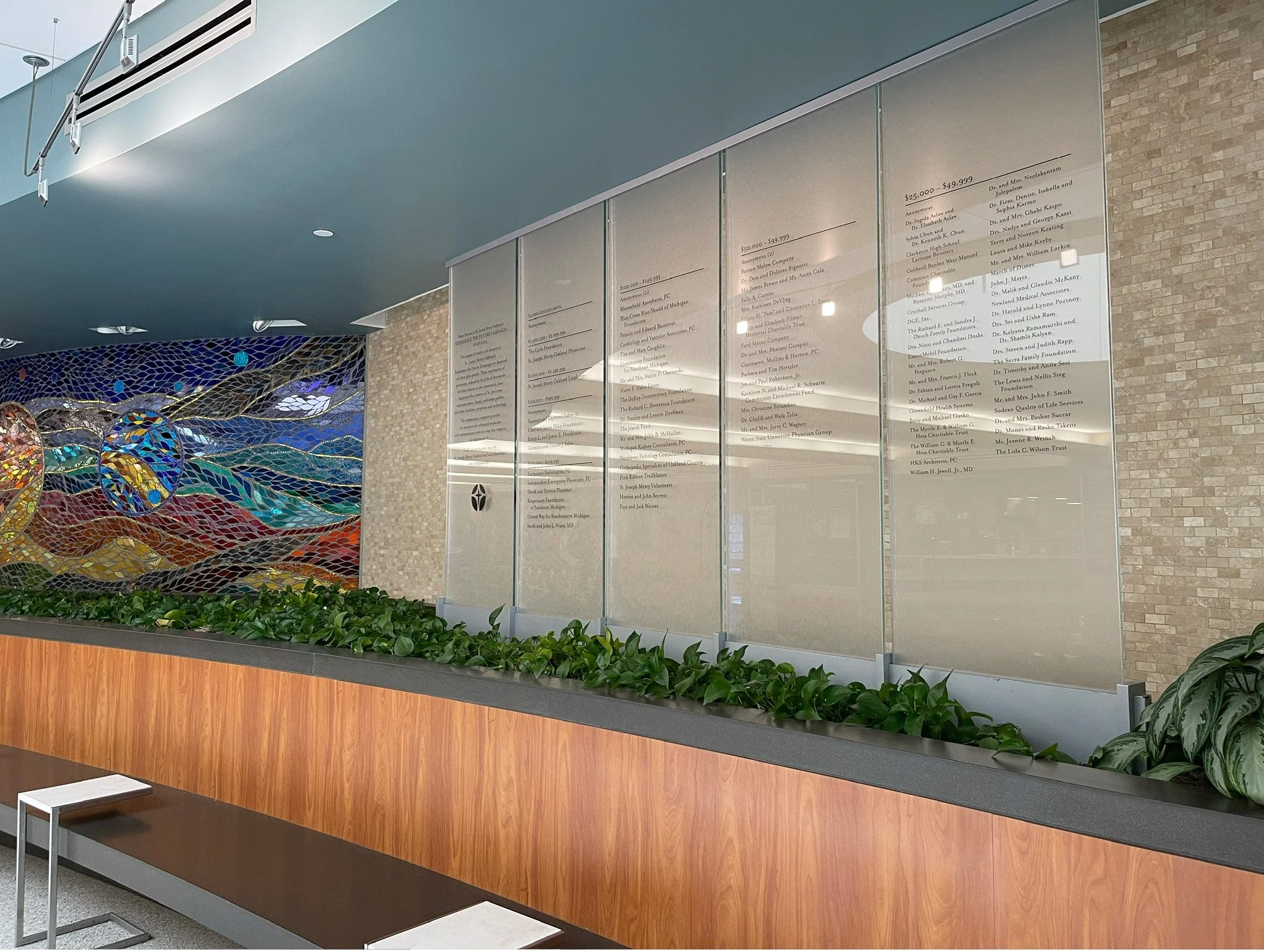
The most successful hospital donor recognition projects place primary recognition in high-visibility public areas: main lobbies, atriums, entry corridors, and community gathering spaces. These locations give the display maximum exposure to donors, board members, community leaders, and prospective supporters.
Secondary recognition, such as naming plaques for rooms, clinics, and specialized areas, extends throughout the facility. A coordinated plaque program ensures these individual displays share a consistent design language with the primary donor wall, reinforcing the institution's brand and creating a cohesive recognition experience.
Choosing locations early in the construction or renovation timeline matters enormously. Once builders install drywall, apply finishes, and complete architectural details, retrofitting a donor wall becomes expensive and disruptive. Early coordination between the recognition partner, the facilities team, and the architect prevents this problem.
Select Materials That Perform in Healthcare Environments
Healthcare facilities demand materials that go beyond aesthetics. Donor walls in hospitals must withstand constant foot traffic, frequent cleaning with commercial-grade products, variable humidity, and direct sunlight in lobby environments.
Materials that perform well in hospital settings include brushed aluminum, stainless steel, acrylic, glass, and engineered solid surfaces like Corian. Each offers different aesthetic qualities and price points, but all deliver the durability that healthcare environments require.
Wood and fabric-based materials can work in specific, climate-controlled settings, but they require more maintenance and may not withstand the aggressive cleaning protocols common in healthcare facilities. The recognition partner should guide material selection based on the specific conditions of each installation location.
Hospitals that invest in quality materials at the outset avoid costly replacements and maintain a polished, professional appearance for years. Choosing inferior materials to save money upfront almost always costs more over time.
Decide Between Physical, Digital, or Hybrid Recognition
Hospital development teams today have more format options than ever. Physical donor walls deliver permanence, architectural presence, and a sense of legacy. Digital donor walls provide flexibility, multimedia storytelling capability, and easy updates. Hybrid systems combine the strengths of both.
The right choice depends on the hospital's specific needs:
Physical Walls: A completed capital campaign with a stable donor list often lends itself to a physical wall that conveys permanence and prestige.
Digital Walls: Hospitals running active campaigns, recognizing annual donors, or sharing impact stories, patient testimonials, and video content benefit most from digital displays. Staff can update these systems without incurring future fabrication costs.
Hybrid Systems: Many hospitals find the strongest approach combines a permanent physical installation for major and legacy donors with a digital component that highlights ongoing campaigns, annual supporters, and dynamic content.
At DonorSigns, we work with healthcare organizations to evaluate which format aligns with their fundraising goals, facility environment, and internal capacity for ongoing management.
Design with the Institution's Brand and Mission at the Center
A donor wall should feel like it belongs in the hospital. It must reflect the institution's visual identity, reinforce its mission, and elevate the space rather than simply occupying it.
The best hospital donor recognition projects go beyond listing names on a wall. They tell a story. They connect each donor's generosity to a tangible outcome: the new cardiac wing, the expanded emergency department, the pediatric care center, the community health initiative. This storytelling transforms recognition from a simple acknowledgment into an emotional experience that inspires future donors.
Design elements that strengthen this connection include mission-aligned typography and color palettes, imagery or iconography that reflects the hospital's care areas, architectural integration that makes the display feel intentional rather than added on, and sculptural or dimensional elements that create visual depth and presence.
Working with a recognition partner who specializes in donor environments, rather than a general signage company, makes a meaningful difference in the final result. Donor recognition requires a nuanced understanding of fundraising strategy, donor psychology, and institutional branding that general sign shops typically lack.
Coordinate Installation with Construction and Event Timelines
Hospital development teams almost always face a hard deadline. A building opening. A ribbon cutting. A donor gala. A board presentation. The recognition display must arrive on time and be ready for installation.
Meeting that deadline requires backward planning from the event date. Design approval, material procurement, fabrication, and installation each take time, and delays in any phase compound the effects on the rest. A recognition partner with an in-house fabrication facility and a proven project management process can compress timelines significantly compared to firms that outsource production.
At DonorSigns, we manage every phase of the process from initial discovery through on-site installation, and the team coordinates directly with construction managers and facility teams to ensure the recognition display installs seamlessly within the broader project timeline.
Plan for Updates and Long-Term Maintenance from Day One
Donor recognition does not end at installation. Hospital campaigns evolve. New donors join at higher giving levels. Annual funds refresh every year. Naming opportunities change hands. The recognition system must accommodate these changes without requiring a complete rebuild.
The smartest hospital teams plan for updates during the initial design phase. They choose systems that allow staff to add names, swap panels, or refresh content with minimal cost and downtime. Digital components make ongoing updates especially efficient, but even physical walls accommodate growth when the design intentionally reserves space and uses modular construction.
A true recognition partner provides a clear update process alongside the initial installation, including documentation, staff training, and an ongoing support relationship that makes future changes straightforward.
The Development Team's Role in a Successful Project
No recognition partner, regardless of expertise, can produce a successful result without an engaged development team. The development team brings the knowledge that drives every design decision: the campaign's story, donor relationships, giving structure, institutional politics, and the emotional weight of recognition.
The most productive partnerships happen when the development team provides clear information early, makes decisions within the agreed timeline, designates a single point of contact for approvals, and trusts the recognition partner to handle design and fabrication. In contrast, the development team focuses on fundraising. That division of responsibilities keeps the project moving and ensures each party contributes what they do best.
What a Successful Hospital Donor Recognition Project Delivers
When hospitals plan recognition well, the results go beyond a beautiful display on a wall. A well-executed donor recognition project delivers several strategic outcomes:
Donors see their names in a prominent, permanent location and feel valued, deepening their commitment to the institution.
Prospective donors visit the facility, see the recognition, and understand the tangible impact of giving, motivating new major gifts.
Board members and executive leadership point to the display with pride, reinforcing confidence in the development team's stewardship.
Staff and patients encounter the recognition daily, creating a visible reminder that community generosity sustains the hospital's mission.
The development team gains a powerful tool for donor cultivation, stewardship events, and future campaign launches.
Donor recognition, when a hospital plans and executes it well, becomes one of the most effective stewardship assets in the development team's toolkit.
Start the Conversation Early
If your hospital is planning a capital campaign, a facility expansion, or a renovation that will include donor recognition, the best time to start planning the recognition component is now. Early engagement with a specialized donor recognition partner gives your team more options, better design outcomes, and a smoother path to an on-time installation that makes your donors, your board, and your community proud.
At DonorSigns, we have partnered with healthcare organizations since 2003 to plan, design, fabricate, and install donor recognition systems that honor generosity and support long-term fundraising goals. Book a discovery call to explore what a successful recognition project looks like for your hospital.
Frequently Asked Questions
1. When should a hospital start planning donor recognition?
Hospitals should start planning donor recognition in the early stages of the capital campaign, not after the building opens or the renovation is complete. Early planning gives the team time to coordinate with architects, align recognition with giving levels, and use the recognition vision as a fundraising tool with prospective donors.
2. Who should a hospital involve in the donor recognition planning process?
A successful project typically involves the development team, executive leadership, facilities or construction management, marketing and communications, and the architectural firm. Establishing a small project committee with clear decision-making authority keeps the process efficient and prevents delays.
3. What materials work best for hospital donor walls?
Materials that perform well in healthcare environments include brushed aluminum, stainless steel, acrylic, glass, and engineered solid surfaces like Corian. These materials withstand heavy foot traffic, commercial cleaning products, and variable environmental conditions common in hospital settings.
4. Should a hospital choose a physical, digital, or hybrid donor wall?
The choice depends on the hospital's specific needs. Physical walls deliver permanence and prestige for completed campaigns. Digital walls offer flexibility and multimedia storytelling for active campaigns. Many hospitals find that a hybrid approach, combining a permanent physical installation with a dynamic digital component, provides the strongest results.
5. How does a hospital coordinate donor wall installation with construction timelines?
The development team should work backward from the target event or opening date to allow sufficient time for design approval, material procurement, fabrication, and installation. Engaging a recognition partner with in-house fabrication and project management capabilities helps compress timelines and coordinate directly with construction teams.